
How to Sew Reusable Fabric Bowl Covers – Quilt Pattern is a wonderful and eco-friendly sewing project that combines practicality with creativity. These fabric bowl covers are not only beautiful but also functional, as they help reduce the use of single-use plastic wraps in the kitchen. Whether you are a beginner or an experienced quilter, this project will inspire you to use leftover fabrics in a sustainable way while adding charm to your home. With the right fabrics and techniques, you can create reusable bowl covers that are durable, washable, and completely personalized.
By following the steps and guidance shared in this tutorial, you’ll be able to practice basic quilting skills while making something truly useful. Reusable fabric bowl covers are also an excellent handmade gift idea for friends and family who appreciate eco-conscious living. When made with quilted fabric, they become sturdier, offering better protection for bowls, casseroles, or even serving dishes at gatherings.
This article will guide you step by step on how to sew reusable fabric bowl covers – quilt pattern, explain fabric choices, demonstrate techniques, and inspire you with design variations. You will also find a detailed FAQ section at the end to answer the most common questions about this type of project. Let’s dive in and start sewing a project that is both fun and sustainable.
1. Choosing the Right Fabrics and Materials
When starting a project like how to sew reusable fabric bowl covers – quilt pattern, your fabric choice will make a big difference in the durability and final appearance of the covers. Cotton fabrics are the most recommended because they are breathable, easy to wash, and widely available in quilting designs. You can also experiment with organic cotton or linen for an even more natural finish.
It is also important to consider whether you want the inside of your bowl covers to be lined. A lining adds strength and allows you to use contrasting or complementary prints that make the piece reversible. Some people prefer to use a waterproof lining such as food-safe laminated cotton, but if you are making quilted versions, cotton fabric layers will usually work well.
Elastic is another essential material. A soft, flexible elastic band ensures that the cover stretches comfortably over different bowl sizes. Choose elastic that is about ¼ inch wide so it doesn’t create bulk but still holds firmly.
Don’t forget about thread and basic quilting tools. A high-quality thread ensures the seams remain strong after many washes. You’ll also need fabric scissors or a rotary cutter, pins or clips, a sewing machine, and a quilting ruler. These tools will make the cutting and sewing process easier and more precise.
For those who want to emphasize the quilt pattern aspect, you can include lightweight batting between fabric layers. This not only makes the cover thicker but also highlights the patchwork effect, giving your project a cozy, handmade charm.
By preparing your materials ahead of time, you set yourself up for a smooth sewing experience and long-lasting results.
2. Cutting and Preparing the Fabric Pieces
To begin sewing your reusable fabric bowl covers – quilt pattern, start by measuring the bowls you want to cover. Place your bowl upside down on the fabric and trace around it with fabric chalk, leaving an additional 2 inches of seam allowance. This extra space accounts for the elastic casing and gives flexibility for covering larger bowls.
If you are using multiple fabrics for a patchwork look, cut them into small squares or strips and sew them together before cutting the circle shape. This adds a charming quilted effect while allowing you to use fabric scraps from other projects.
Once your circle is cut, prepare the elastic casing. You can do this by folding the fabric edge inward twice, creating a channel where the elastic will pass through. This step requires precision because an even fold ensures that the elastic fits neatly all around.
If adding batting, cut a circle the same size as your fabric. Sandwich the batting between the outer and inner fabric layers, then pin them together. This gives your bowl cover structure while still keeping it soft and flexible.
Quilting stitches can be added at this stage to hold the layers together. You can sew straight lines, diagonal crisscross patterns, or even free-motion quilting designs for a personalized touch. Quilting not only adds decoration but also reinforces the layers, making your cover more durable.
After preparing all your pieces, you’ll be ready to assemble the project. This preparation step ensures that the final sewing process goes smoothly and efficiently.
3. Sewing and Assembling the Bowl Covers
Now that your fabric is ready, let’s move to the most important stage in how to sew reusable fabric bowl covers – quilt pattern: assembling the pieces. Begin by folding and pressing the fabric edges to create a smooth casing for the elastic. This can be done with an iron to ensure crisp folds that are easier to stitch.
Sew around the folded edge, leaving a small opening where you will insert the elastic. A straight stitch works best here, but make sure your stitching line is strong since the elastic will stretch frequently.
Attach a safety pin to one end of the elastic and carefully feed it through the casing. Gently work the pin around the entire circle until the elastic comes out the other side. Adjust the length so that the cover fits snugly over the bowl without being too tight.
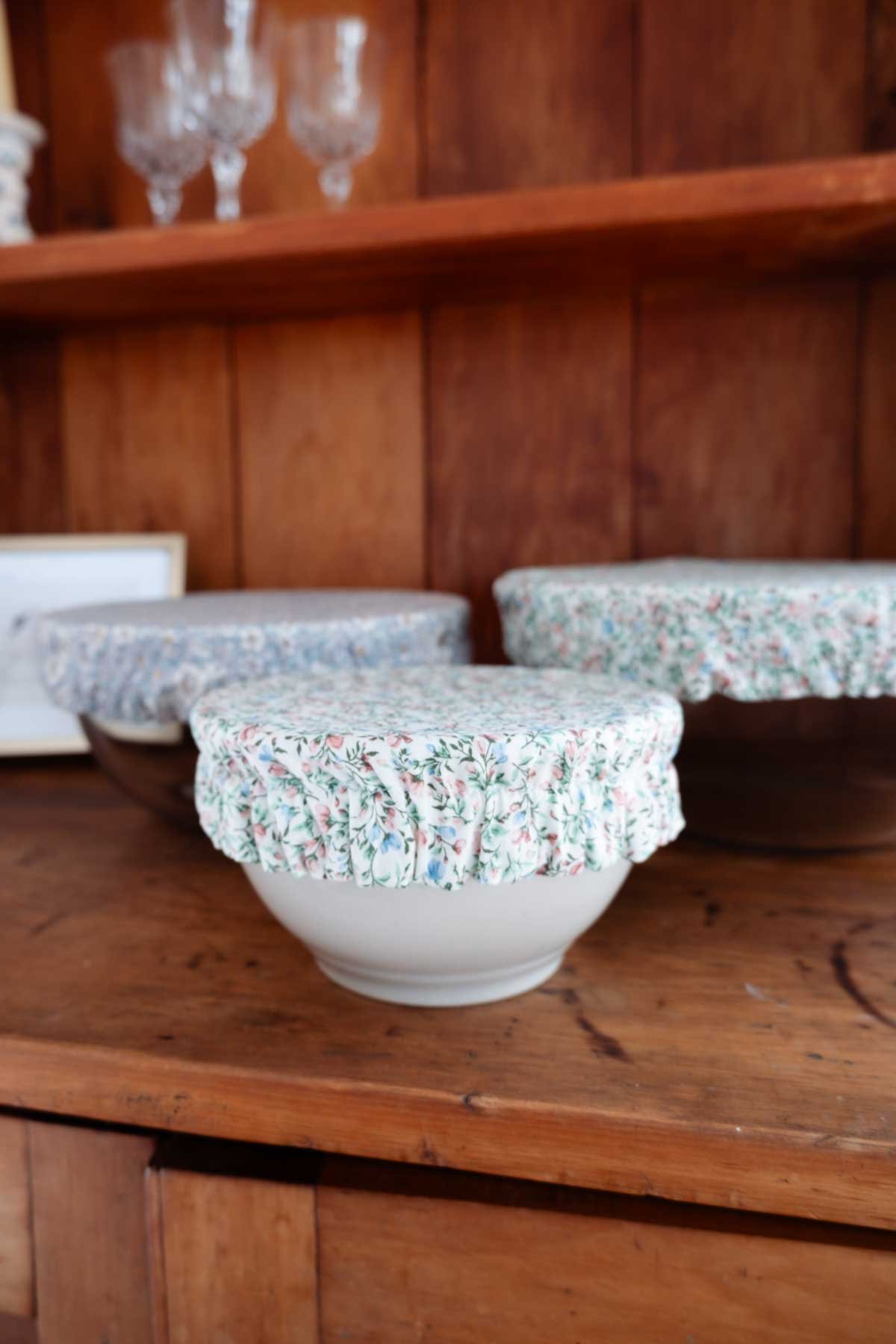
Once the elastic is in place, overlap the ends by about an inch and stitch them securely together. Then tuck the elastic inside the casing and sew the opening closed. Your cover should now resemble a fitted cap that stretches easily over the bowl.
If you added quilting, this is the time to admire how beautifully the patterns show on the finished piece. A quilted design adds dimension and a cozy texture, transforming a simple cover into something special.
Finish by trimming any loose threads and giving your cover a final press with the iron. Your first reusable fabric bowl cover is now complete and ready to use.
4. Creative Variations and Practical Uses
One of the most exciting aspects of how to sew reusable fabric bowl covers – quilt pattern is the freedom to explore creative variations. For example, you can make sets of covers in different sizes, ensuring you always have one that fits your bowls, casserole dishes, or even salad servers.
Experiment with patchwork quilting techniques such as log cabin, half-square triangles, or strip piecing. These designs not only help you practice quilting skills but also create colorful, eye-catching results. Mixing and matching fabrics gives each cover a unique personality.
Seasonal fabrics are another fun idea. Use festive prints for holidays like Christmas, Easter, or Thanksgiving, and enjoy practical kitchen accessories that also double as home décor. Bright florals or modern geometric patterns can also add a fresh and stylish touch to your dining table.
Practical uses go beyond the kitchen. These covers are great for picnics or outdoor gatherings because they keep insects and dust away from food. They are also washable and reusable, which makes them ideal for families who want to live more sustainably.
You can even customize them as gifts. Handmade fabric bowl covers make thoughtful housewarming presents, especially when paired with a set of matching quilted placemats or pot holders. They combine beauty, usefulness, and eco-friendliness all in one.
With so many creative possibilities, this simple project can be adapted to fit any style or occasion.
FAQ About Sewing Reusable Fabric Bowl Covers
1. Are fabric bowl covers safe for food?
Yes, fabric bowl covers made with 100% cotton are safe to use over bowls. However, they should not be placed directly in contact with food, especially moist or oily foods. Always use them as a cover over a dish or container.
2. How do I wash reusable fabric bowl covers?
They can usually be machine washed with mild detergent. Use cold or warm water, and avoid bleach to preserve fabric colors. Line drying is best, but they can also go in the dryer on low heat.
3. Can I make these covers waterproof?
Yes, by using laminated cotton or adding a food-safe waterproof lining, you can create covers that resist moisture. Quilted versions may not be fully waterproof, but they are durable and breathable.
4. What size bowls can these covers fit?
Fabric bowl covers can be customized to fit any size bowl. By adjusting the elastic and cutting fabric circles with generous seam allowances, you can cover anything from small cereal bowls to large mixing bowls.
5. Do I need a sewing machine to make them?
While a sewing machine makes the process faster and neater, it is possible to sew fabric bowl covers by hand. Use small, tight stitches and strong thread for durability.
6. How long do reusable fabric bowl covers last?
With proper care, they can last for years. High-quality fabrics and strong stitching will ensure the covers remain useful even after repeated washing and stretching.
Learning how to sew reusable fabric bowl covers – quilt pattern is both a rewarding and sustainable sewing project. It teaches you basic quilting techniques, allows you to use leftover fabrics creatively, and results in something functional that reduces plastic waste. From fabric selection to sewing and creative variations, this project offers endless possibilities for beginners and experienced quilters alike.
Now that you know how to make your own quilted bowl covers, why not give it a try? Share your thoughts, suggestions, and experiences—I’d love to hear how you personalize this eco-friendly project and what fabrics or patterns you choose for your unique creations.